Black water vs grey water: what the difference means for your health and cleanup
By James Silva · Updated 2026-07-29
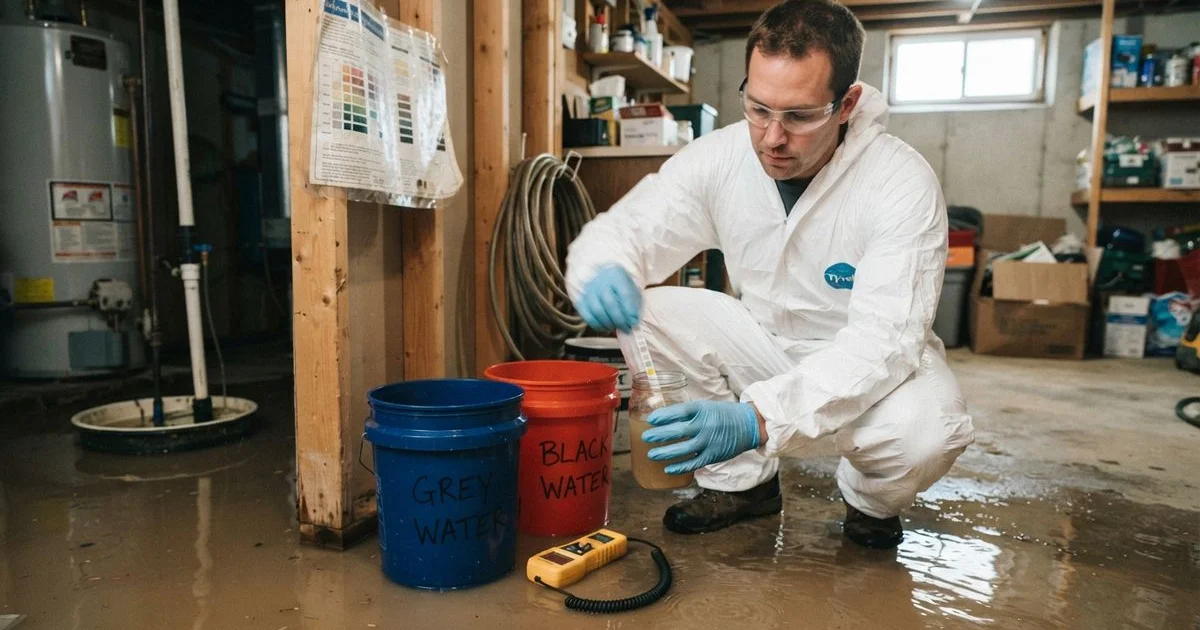
Not all water damage carries the same health risk, and the difference between grey water and black water is exactly where that risk changes. Understanding which category you’re dealing with affects both how urgently you need to act and whether DIY cleanup is even an option. This is general health and safety information, not medical advice.
What separates the categories
Restoration professionals classify water damage into three categories based on contamination level. Clean water, from a supply line or rainwater, carries no immediate health risk. Grey water, from sources like a washing machine, dishwasher, or shower drain, is moderately contaminated and can cause illness if ingested or if it contacts an open wound. Black water, from sewage, toilet backups, or flood water, is grossly contaminated and carries a genuine infection risk on contact.
| Category | Common sources | Health risk |
|---|---|---|
| Clean water | Supply line, rainwater | Minimal |
| Grey water | Washing machine, dishwasher, sink overflow | Moderate |
| Black water | Sewage, toilet backup, flood water | High |
Why the distinction matters more than people expect
The health risk isn’t just theoretical. Grey water can contain bacteria and other contaminants at levels that cause gastrointestinal illness or skin irritation with direct contact, particularly for anyone with a cut, rash, or compromised immune system. Black water goes further, it’s associated with pathogens capable of causing serious illness, which is why professional cleanup protocols for black water look completely different from a standard mop-and-fan approach.
How the cleanup approach changes
Clean water cleanup is largely about drying, extraction, air movers, dehumidifiers, done thoroughly and monitored until materials reach dry standard. Grey water cleanup adds a sanitizing step, since surfaces that contacted it need disinfection, not just drying. Black water cleanup is a different category of job entirely: contaminated porous materials generally can’t be saved and get removed rather than cleaned, protective equipment is mandatory for anyone handling it, and disposal follows specific protocols rather than regular waste handling.
Time works against you either way
Both categories get more dangerous, and more expensive to remediate, the longer they sit. Grey water left untreated for more than a day or two starts developing bacterial growth that pushes it toward black water contamination levels. This is part of why fast response to any water intrusion matters, not just for drying time but for keeping the contamination level from climbing. This urgency is exactly why the basement flooding: first 24 hours guide puts so much weight on fast documentation and extraction.
When to call a professional
Grey water affecting a small area, cleaned up promptly with appropriate gloves and disinfectant, is sometimes manageable without a full flood and water extraction crew, though a professional assessment is still worth considering if it’s touched carpet or a larger area. Black water, regardless of the amount, isn’t a DIY situation. The infection risk and the specialized disposal requirements mean this category needs a professional every time. Our ranking method is a reasonable place to start if you’re not sure who to call.
A note on the classification system
Restoration professionals sometimes reference IICRC water category standards, which formalize this three-tier system, alongside a separate classification for how much water and how many materials are affected. You don’t need to memorize the terminology to make good decisions, but if a company references “Category 2” or “Category 3” water on a quote, that maps directly to grey water and black water respectively, and it’s worth asking them to explain what that means for your specific cleanup if it isn’t clear.
Protecting yourself and your household
Keep children and pets away from any water damage until you’ve identified the category, since it’s not always obvious by looking. If you’re not sure whether you’re dealing with grey or black water, treat it as the more serious category until a professional confirms otherwise, that’s the safer default by a wide margin.
Knowing the difference between grey water and black water isn’t just restoration terminology, it directly shapes what’s safe for you to do, what needs a professional, and how quickly you need to act. When water damage happens, identifying the source is one of the first and most useful things you can do, and our home page is a good next stop for finding help.
Common questions
- Can grey water turn into black water if it's not cleaned up?
- Yes, and this happens more often than people expect. Grey water left standing for more than a day or two starts developing bacterial growth that pushes it toward black water contamination levels, which is one reason speed matters even for a moderately dirty leak.
- Is it ever safe to clean up black water myself?
- No. Black water contamination carries a real infection risk regardless of the visible amount, and it requires protective equipment and disposal methods that go beyond typical household cleaning supplies.
- How do I know which category my water damage falls into?
- The source is the clearest indicator: a supply line or rainwater is clean water, an appliance overflow is grey water, and anything involving sewage, flood water, or a toilet backup is black water. When in doubt, treat it as the more contaminated category and call a professional.
- Does grey water smell different from clean water?
- Often, yes, a mild, soapy, or slightly sour smell is common with grey water, compared to no smell at all with clean water. Black water typically has a much stronger, unmistakable sewage odor.