Burst pipe emergency: what to do before help arrives
By James Silva · Updated 2026-07-22
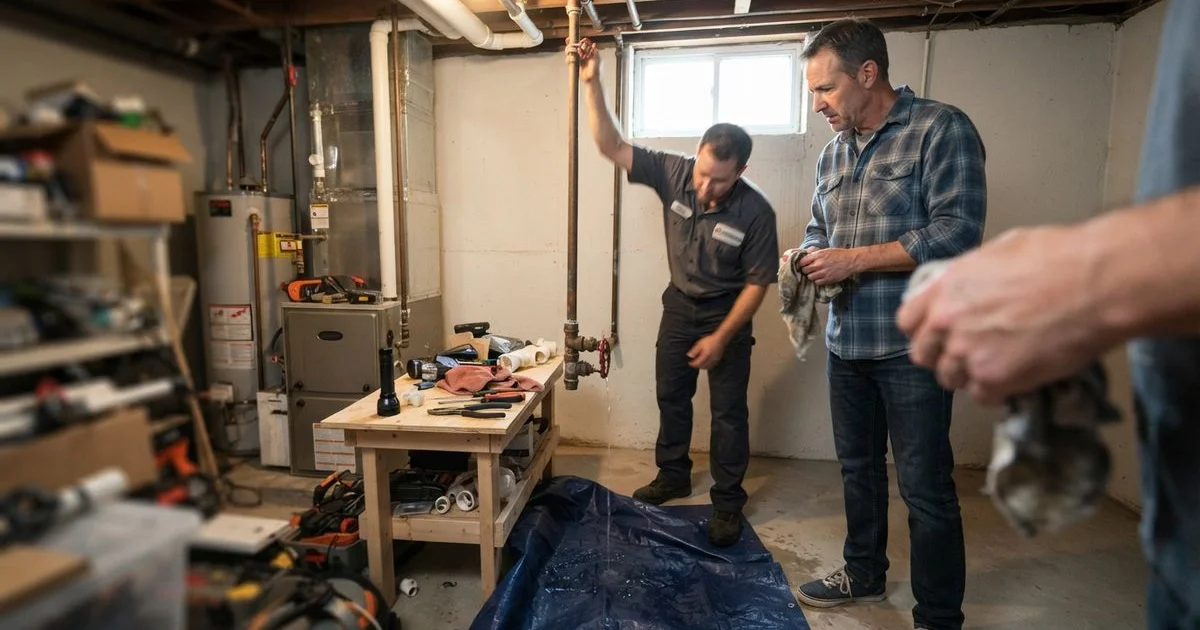
A burst pipe turns a normal day into an emergency fast, and the first few minutes matter more than almost anything else in the process. Knowing exactly what to do, in order, before help arrives can be the difference between a contained mess and a much bigger restoration job.
Step 1: shut off the water
Finding your main shut-off valve is the single most important thing you can do, and it stops the problem from getting worse while everything else gets sorted out. The valve is usually in the basement or a utility area, close to where the water line enters the house. If you’ve genuinely never located it, take a minute now, before an emergency, to find it and make sure you know how to turn it.
Step 2: cut power to the affected area, if it’s safe
Water and electricity are a dangerous combination. If the affected area is near outlets, appliances, or your breaker panel, and you can reach your electrical panel without stepping through water, shut off power to that zone. If the panel itself is in the flooded area, don’t attempt it, wait for a professional.
Step 3: contain what you can
Towels, buckets, and anything else on hand can slow the spread while you wait for help. Move furniture, electronics, and valuables out of the water’s path if it’s safe to do so. Don’t worry about being thorough here, the goal is limiting spread for the next 20 to 30 minutes, not solving the whole problem yourself. If the water is pooling in a basement, the hazards multiply fast; the basement flooding: first 24 hours guide covers what changes when it’s a below-grade space.
| Priority | Action | Why it matters |
|---|---|---|
| 1 | Shut off main water valve | Stops the source |
| 2 | Cut power if safe | Prevents electrical hazard |
| 3 | Contain and move valuables | Limits spread and loss |
| 4 | Call a restoration company | Starts professional response |
| 5 | Photograph everything | Supports insurance claim |
Step 4: call for professional help
Once the water is off and the immediate area is somewhat contained, call a 24/7 emergency response company. Reputable companies aim to arrive within one to four hours, even overnight or on a weekend, since standing water causes exponentially more damage the longer it sits untouched.
Step 5: document before cleanup begins
Take photos and video of the affected area before extraction starts. This matters for your insurance claim and gives you a clear before-and-after record if there’s ever a dispute about the scope of damage. Note the approximate time the pipe burst and when you noticed it, since insurers often ask about response timing.
While you wait for the crew
Open a window if weather allows, for airflow, and avoid running your furnace or air conditioner, since a shared HVAC system can spread moisture through the house. Don’t use a household vacuum on standing water, it isn’t built for it and poses a shock risk. If you smell gas at any point, leave the house immediately and call emergency services before anything else.
Why this happens more in winter
Frozen pipes bursting as they thaw is one of the most common causes of winter water damage across Ontario, particularly in homes with pipes running through unheated spaces like an attic, garage, or exterior wall. Water expands as it freezes, and the pressure buildup is what eventually splits the pipe, often not at the exact moment of freezing but later, once things start to warm up. Homes left unheated during a winter trip away from home are especially vulnerable, which is part of why many insurers ask about minimum temperature settings if a house was unoccupied when a pipe burst.
After the immediate crisis
Once the water’s extracted and drying equipment is running, ask your restoration company or a plumber about why the pipe burst in the first place, whether it was freezing, age, or pressure, since that affects whether it’s likely to happen again elsewhere in your plumbing. If you’re looking for a company before an emergency happens, our home page lists vetted local providers by category, and our ranking method explains how those rankings are built.
A burst pipe feels chaotic in the moment, but the sequence is simple: stop the water, protect yourself and your belongings, call for help, and document what happened. Getting those five steps right in the first half hour makes everything that follows go more smoothly.
Common questions
- How do I find my main water shut-off valve?
- It's usually in the basement, near where the water line enters the house, often close to the water meter. If you've never located it, it's worth finding it now, before an emergency, so you're not searching for it while water is actively flooding a room.
- What if I can't find or reach the shut-off valve?
- Call your water utility's emergency line, many can shut off supply at the street level. In the meantime, focus on moving belongings out of the water's path and containing the flow with towels or buckets if it's safe to do so.
- Is it normal for a burst pipe to happen overnight or during a cold snap?
- Yes, frozen pipes bursting as they thaw is one of the most common causes of winter water damage in Ontario. Overnight and holiday emergencies are common enough that most restoration companies staff 24/7 lines specifically for this.
- Should I try to fix the pipe myself before a plumber arrives?
- Stopping the water flow at the shut-off valve is the priority, not fixing the pipe itself. Attempting a repair without the right materials, especially under pressure, often makes the leak worse or creates a new one nearby.