What mold remediation costs in Ontario and what drives the price
By James Silva · Updated 2026-07-06
Mold remediation pricing swings more than most home repairs, because the real cost driver isn’t the mold you can see, it’s how far it has spread behind the surfaces you can’t. A homeowner in Ontario comparing quotes for the first time often ends up with numbers that look wildly inconsistent, when really they’re pricing different jobs. Here’s what actually moves the number.
What a typical job costs
Surface mold on drywall, tile, or trim, caught early and confined to a small area, is the cheapest scenario: often a few hundred dollars up to roughly C$1,000 for containment and removal. Once mold has spread behind walls, under flooring, or through an HVAC system, expect the range to climb into the C$1,000 to C$2,500 band, since the crew now has to open up building materials, run containment barriers, and treat a larger surface area. Widespread mold with structural involvement, think a basement that flooded and sat wet for days, can push past C$3,000 once demolition, disposal, and rebuild work are factored in.
| Scope | Typical range (C$) |
|---|---|
| Small surface patch, one room | 600 – 1,000 |
| Moderate, behind walls or under flooring | 1,000 – 2,500 |
| Widespread, structural involvement | 2,500 – 4,000+ |
These are general ranges, not a quote. The only way to get an accurate number is an on-site inspection, since square footage alone doesn’t capture how deep the contamination goes.
What actually drives the price
Four things move mold remediation costs more than anything else:
How far it has spread. Surface mold is a cleaning job. Mold behind a wall cavity or under subflooring means demolition, disposal, and rebuild, which is where most of the cost sits.
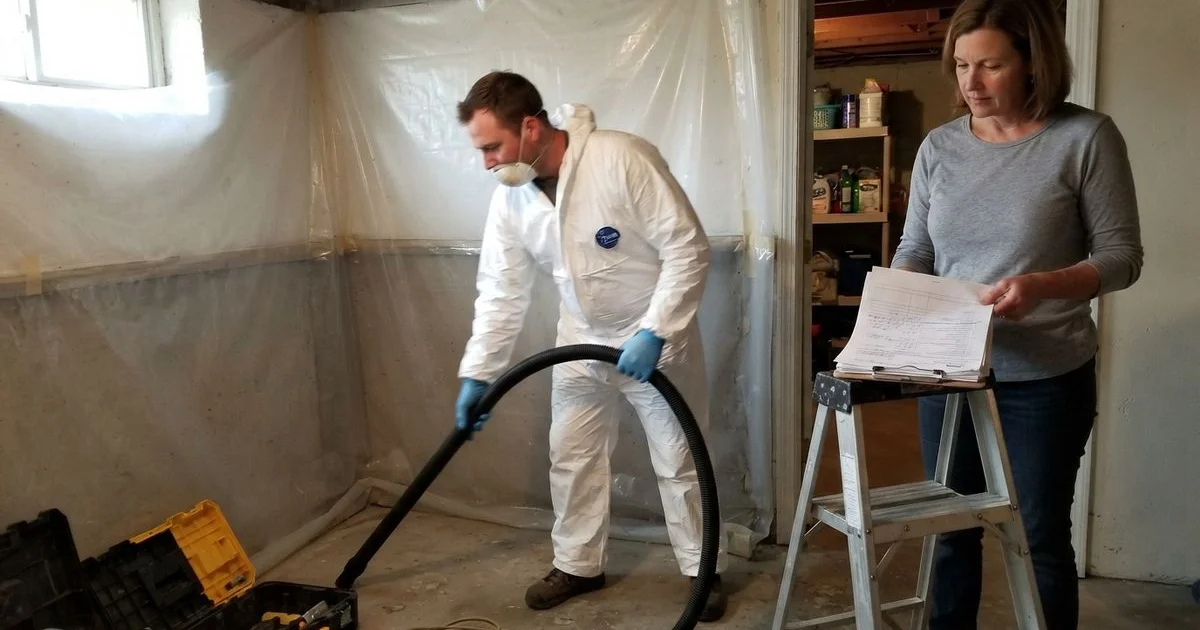
Containment requirements. A reputable company seals off the work area with plastic sheeting and runs negative air pressure so spores don’t spread to the rest of the house during the job. That equipment and labor is a real line item, not padding.
Testing and clearance. Pre- and post-remediation air or surface testing adds cost but gives you documented proof the job actually worked, which matters if you ever sell the house or file an insurance claim.
Access and material type. Mold in a crawlspace or behind built-in cabinetry costs more to reach than mold on an open basement wall. Porous materials like drywall and carpet underlay usually get removed rather than cleaned, since mold roots into them in a way that resists surface treatment.
Mold that’s spread this far can also affect indoor air quality well before you notice a musty smell; the mold health risks after water damage guide covers the warning signs worth acting on early.
Insurance and the mold question
Mold coverage is one of the more confusing parts of Ontario home insurance, because most standard policies distinguish between mold caused by a sudden, accidental event and mold caused by neglect or a long-term moisture problem. A property that gets dried out quickly after a leak rarely turns into a mold claim in the first place, which is why fast response matters more than people expect. Browsing local mold remediation providers before you need one, so you already know who to call, can shave hours off that response time. If mold has already set in before you call anyone, your insurer will likely ask when the underlying leak started and whether it was reported promptly. Get everything in writing and take photos before any cleanup begins.
This is general cost information, not a substitute for a licensed inspection or advice from your insurance provider. Confirm your own policy terms and get a written scope from any company before signing.
Getting a fair quote
Ask every company for the same three things: a written scope of work, whether testing is included before and after the job, and what the disposal and rebuild costs cover. A quote that’s dramatically lower than others is usually missing one of these, not offering a better deal. Our directory’s ranking method weighs verified customer outcomes alongside pricing transparency, which is a reasonable starting point if you’re not sure who to call first.
What to watch for before you sign
A few patterns show up often enough to flag. A company that quotes a price over the phone without seeing the space is guessing. A company that pressures you to sign same-day, before you’ve had time to get a second opinion, is optimizing for their close rate, not your outcome. And a company that can’t explain the difference between cleaning and removal for your specific situation probably hasn’t assessed it carefully enough to price it correctly.
Mold remediation is one of the few home repairs where the cheapest bid and the most expensive bid can both be reasonable, depending on what each one actually includes. Get the scope in writing, ask about testing, and you’ll be comparing like for like.
Common questions
- Does home insurance cover mold remediation in Ontario?
- It depends on the cause. Mold that results from a sudden event, like a burst pipe you reported quickly, is often covered. Mold from a slow, ongoing leak or long-term humidity is usually treated as a maintenance issue and excluded. Check your policy wording and ask your insurer directly before you assume either way.
- Can I remove small amounts of mold myself?
- A patch smaller than roughly one square metre on a hard, non-porous surface is often manageable with proper gloves, an N95 mask, and ventilation. Anything larger, anything behind walls or under flooring, or mold tied to a known water intrusion is a job for a licensed remediation company.
- Why do two quotes for the same job come in so far apart?
- Scope is the usual reason. A low quote may only cover visible surface cleaning, while a higher one includes containment, air scrubbing, moisture testing, and a post-job clearance check. Ask each company to itemize what is included before comparing numbers.
- How do I know the mold is actually gone after the work is done?
- Ask for a written clearance report with moisture readings, not just a visual check. Some homeowners also hire an independent third-party inspector for a post-remediation verification, separate from the company that did the work.