What water damage restoration costs in Ontario and what changes the price
By James Silva · Updated 2026-07-10
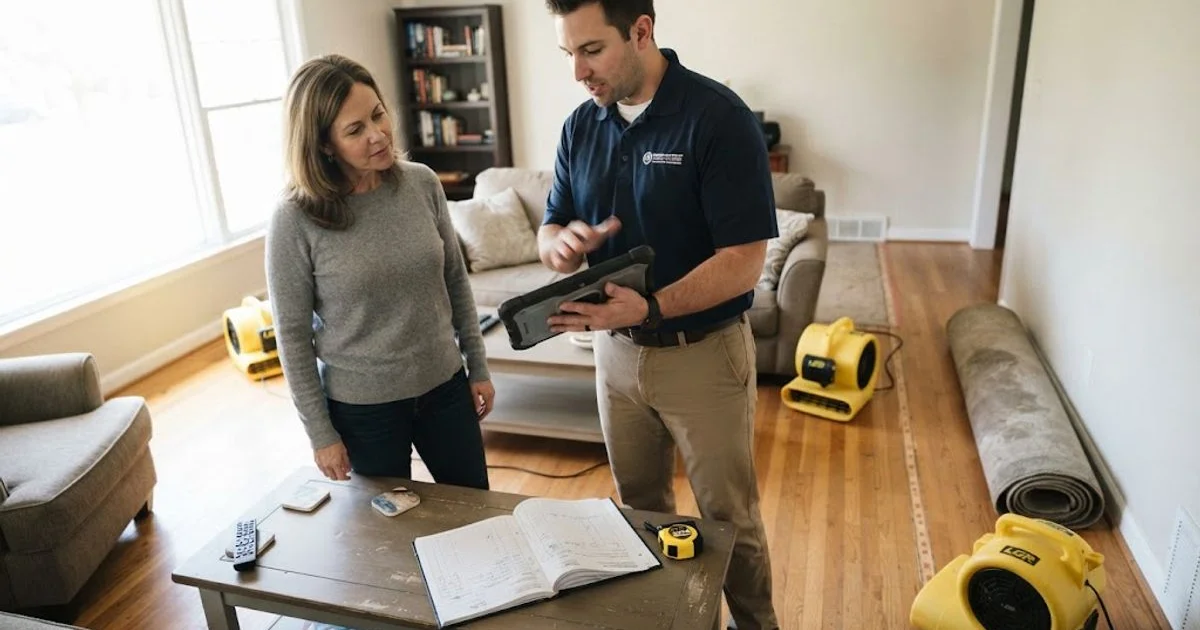
Water damage restoration cost is one of the first questions almost everyone asks, and one of the hardest to answer with a single number, because the price depends on three things that vary a lot from job to job: how much area is affected, what kind of water it was, and what type of flooring or material got wet.
Typical price ranges
For a small, contained job, think one room with clean water from a supply line, expect somewhere in the C$1,500 to C$3,000 range for extraction, drying, and basic cleanup. Structural repairs, if any are needed, get quoted separately once the space is fully dry. Larger jobs, multiple rooms, contaminated water, or hardwood flooring that needs specialized drying, commonly run C$4,000 to C$8,000 or more.
| Job type | Typical range (C$) |
|---|---|
| Small, clean water, one room, hard flooring | 1,500 – 3,000 |
| Moderate, grey water or carpet involved | 3,000 – 5,500 |
| Larger, contaminated water, multiple rooms | 5,500 – 8,000+ |
These are general ranges based on typical extraction and drying scope. An on-site inspection is the only way to get an accurate number for your specific situation.
What actually changes the price
Water category. Clean water, from a supply line or rainwater, is the least expensive to remediate. Grey water, from sources like a washing machine or dishwasher, requires more sanitizing and typically costs around 1.5 times a comparable clean-water job. Black water, from sewage or flood water, involves hazmat-level protocols and disposal, often more than double the clean-water baseline.
Flooring type. Hard flooring like tile or vinyl is the cheapest to dry, since it doesn’t absorb water the way porous materials do. Carpet and underlay usually add 20 to 25 percent to the cost. Hardwood or engineered wood floors are the most expensive to save, since they need slow, controlled drying to avoid warping, and sometimes can’t be saved at all.
Size of the affected area. This one’s intuitive: a bigger wet area means more equipment, more labor hours, and more materials to remove or dry. Restoration companies typically price by square footage of affected space, not the size of the whole house.
Timing of the call. Emergency, after-hours call-outs often carry a premium, sometimes 30 to 60 percent above a standard business-hours rate. That said, waiting to save money on the call-out fee usually costs more overall, since standing water spreads damage the longer it sits.
Where insurance fits in
Sudden, accidental water damage, like a burst pipe, is commonly covered under standard Ontario home insurance policies, often with your deductible as the main out-of-pocket cost. Gradual leaks or damage from lack of maintenance are typically excluded. Overland flooding, water entering from outside the home, usually requires a separate flood endorsement that not every policy includes. Review your specific policy or call your insurer before you assume either way, since coverage details vary by insurer and by policy year.
This is general cost information, not insurance or legal advice. Confirm coverage details directly with your insurance provider for your specific policy.
Getting quotes you can actually compare
Ask each company for a written, itemized scope, not just a total number. A lower quote that only covers extraction, while a higher one includes drying equipment rental, monitoring visits, and disposal, isn’t actually a better deal, it’s a different, incomplete job. If you’re weighing several providers, our water damage restoration directory lists options with verified customer feedback, and our ranking method explains how those rankings get built, so you’re not comparing star ratings alone. You can start browsing from our home page at any point in this process.
The biggest cost mistake homeowners make isn’t overpaying for restoration, it’s waiting to call anyone while water keeps spreading. A same-day response, even at a modest premium, is usually the cheaper outcome once you factor in what a few extra days of standing water does to flooring, drywall, and eventually mold risk.
Common questions
- What's a rough starting price for water damage restoration?
- A small, clean-water job, like a single room affected by a supply line leak, often falls in the C$1,500 to C$3,000 range for extraction and drying. Larger jobs with contaminated water or multiple rooms can run several thousand dollars more.
- Does the type of water matter for the price?
- Yes, significantly. Clean water from a burst supply line is the cheapest to handle. Grey water, like an overflowing washing machine, costs more due to added sanitizing steps. Black water, such as sewage or flood water, costs the most because of contamination protocols and disposal requirements.
- Is a free estimate actually free?
- Most restoration companies in Ontario will do an initial on-site assessment at no cost, especially for emergency calls, since they're hoping to win the job. Ask upfront whether the estimate visit itself carries any fee before a technician comes out.
- Will my insurance company negotiate the price with the restoration company directly?
- Often, yes, if you're filing a claim and the company works with your insurer. That can simplify things, but you should still get a copy of the scope and invoice for your own records rather than relying solely on the insurer-contractor conversation.